Why the “VIX 30 Buy / VIX 14 Sell” Strategy Fails


Context
This note responds to a popular claim on X that a simple VIX rule — buy above 30, sell near 14 — can generate consistent long-term outperformance.
The argument is appealing. The conclusion is wrong.
What follows is a structural breakdown of why this approach fails across regimes.
Why the VIX Trading Strategy (Buy at 30, Sell at 14) Fails
The idea is simple:
Buy stocks when VIX is above 30.Sell stocks when VIX is around 14.Repeat the cycle.
This VIX trading strategy sounds intuitive, but it does not work over time.
1) It Forces You Out of Bull Markets
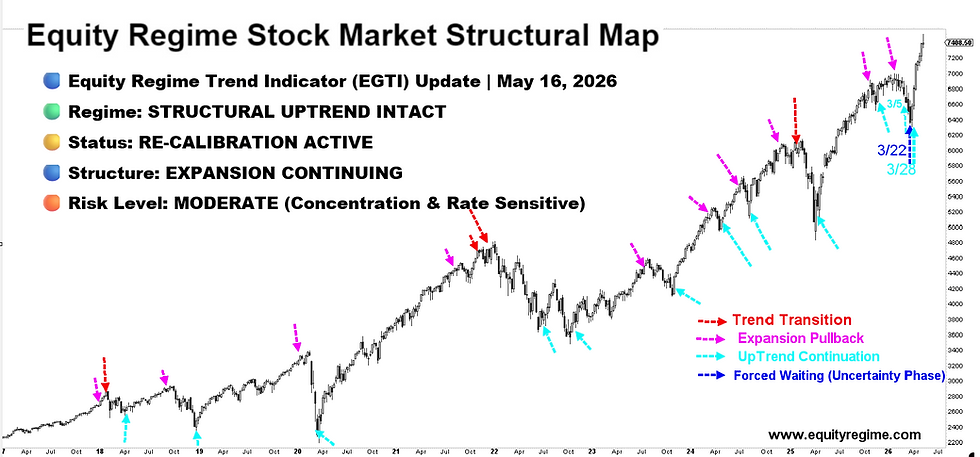
In a sustained uptrend, VIX does not stay elevated. It compresses and remains in a low range, typically between 12 and 20.
That environment reflects:
stable liquidity
strong trend persistence
low volatility expansion
Selling at VIX 14 means exiting precisely when the market structure is strongest.
Most long-term gains occur during these low-volatility trend phases.
This is not risk control
.It is systematic underexposure.
2) It Assumes All VIX Spikes Are the Same
They are not.
VIX above 30 can represent very different conditions:
In a bull market: temporary panic → often a buyable pullback
In a weak or tightening regime: structural stress → further downside
Volatility does not peak at a fixed level.
It can expand:30 → 40 → 60 → 80
Buying solely based on VIX level ignores the underlying regime.
This is where the VIX trading strategy breaks down in real market conditions.
3) It Treats Markets as Mean-Reverting Systems
This strategy assumes prices revert quickly after volatility spikes.
But markets are not purely mean-reverting.
They are:
trend-driven
regime-dependent
liquidity-sensitive
As a result:
Low VIX environments (where trends develop) are sold
High VIX environments (where risk expands) are bought
This creates negative asymmetry over time.
4) When Does It Work?
Only in range-bound markets.
When:
liquidity is stable
no strong trend exists
volatility oscillates within a defined band
Outside of that environment, the strategy breaks down.
Structural Conclusion
VIX is not a trading signal. It is a volatility condition.
Identical VIX levels can lead to completely different outcomes depending on:
liquidity regime
credit conditions
trend structure
Markets do not operate on fixed thresholds. They operate on regimes.
Final Note
You don’t trade VIX levels. You trade the structure behind them.