AI Power Doctrine: Infrastructure Lockdown and Capital Immobilization

Executive Summary
The competitive logic of the AI industry has undergone a structural shift: moving from "algorithmic superiority" to "physical resource predation." This is not a marginal increase in utility costs; it is a hard constraint imposed by energy architecture on computational expansion. NVIDIA, Tesla, and Alphabet are intervening across distinct dimensions to secure survival within a fracturing power grid.
I. NVIDIA: The Structural Forcing Function
NVIDIA is not a power generator; it is an exponential amplifier of grid stress.
Architectural Coercion: The Blackwell architecture, pushing rack densities toward the 120kW threshold, is not an incremental upgrade. It is a Forced Re-calibration of the existing distribution network.
Externalization of Capex: By defining extreme energy density standards, NVIDIA effectively externalizes its expansion costs onto the utility sector, forcing a physical overhaul of transformers and liquid cooling ecosystems.
Institutional Qualitative: NVIDIA is accelerating the penetration of balance sheets into physical reality. This high-density demand is the primary driver of liquidity immobilization into infrastructure.
II. Tesla: Disruption of the Peaking Monopoly
Tesla’s Megapack and Virtual Power Plant (VPP) architectures are not mere supplements to the grid; they represent a disintermediation of traditional power pricing.
Arbitrage Intervention: Through distributed storage, Tesla intervenes in the grid’s most profitable segment—Peak Pricing. This erodes the monopoly that utility giants hold over "peaking power."
Structural Friction: This distributed model introduces structural friction into centralized dispatching, injecting financial-grade optionality into load balancing rather than just selling hardware.
Institutional Qualitative: Tesla is constructing an autonomous "liquidity buffer" outside the traditional grid, attempting to hedge the grid's physical rigidity through energy storage elasticity.
III. Alphabet: Credit Leverage in Infrastructure
Alphabet’s pursuit of 24/7 Carbon-Free Energy (CFE) has stripped away the ESG narrative, entering a phase of Forward Supply Lockdown.
Duration Mismatch: Through 20-year nuclear PPAs and geothermal financing, Alphabet is using its massive balance sheet to underwrite exceptionally heavy, long-term infrastructure.
Credit Injection: This is the conversion of high-velocity tech capital into Long-duration physical assets. Alphabet is not merely interacting with the grid; it is capitalizing it.
Institutional Qualitative: This is a defensive hedge designed to eliminate discount rate risk by ensuring computational power is not stranded during the "resource bottleneck" phase of AI expansion.
IV. LRM-14 Framework: The Macro Impact
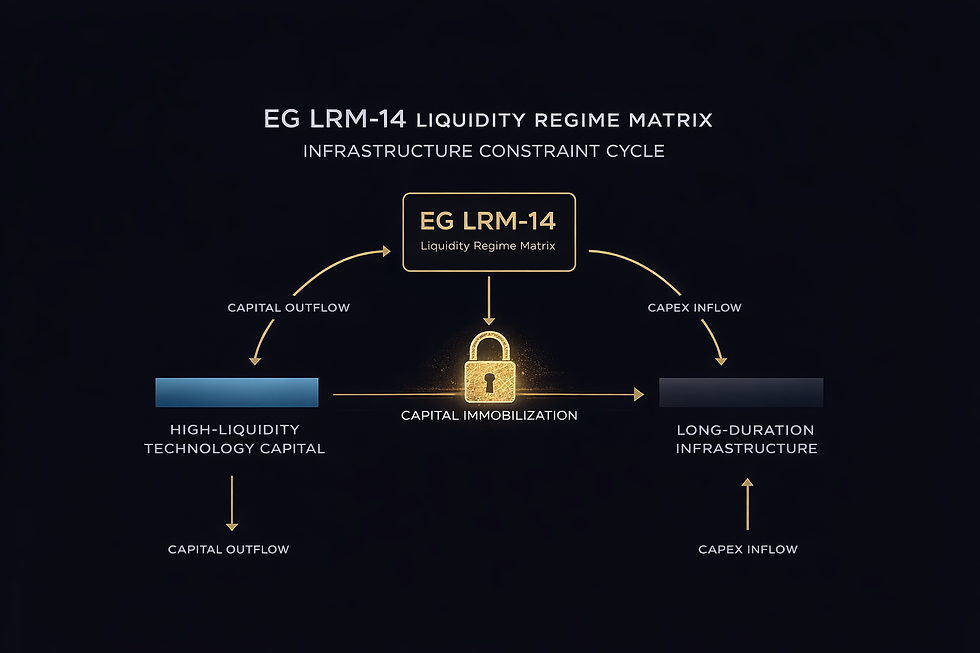
Through the lens of the Liquidity Regime Matrix - 14 (LRM-14), this trend signals a systemic evolution of risk:
Capital Immobilization: Cash flows previously recycled through buybacks and financial markets are being locked into long-cycle physical infrastructure. This leads to a compression of Valuation Elasticity for Big Tech.
Shift from "Premium" to "Resource Margin": Pricing power is shifting from software margins to resource scarcity. When power becomes the binding constraint, the ROIC (Return on Invested Capital) cycles are involuntarily elongated.
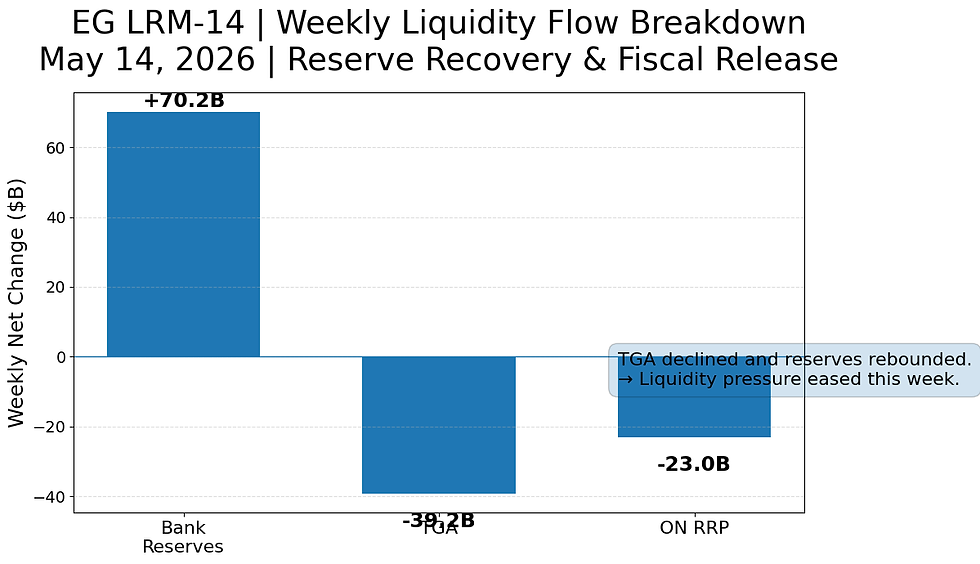
Liquidity Attrition Rate: Massive Capex injections into energy infrastructure imply a migration of capital from Bank Reserves to physical assets. If the TGA fails to offset this through timely releases, the system faces latent Tightening pressure.
V. Strategic Conclusion
The AI expansion phase has entered an Infrastructure Constraint Cycle. These cycles are characterized by being heavy, slow, and capital-intensive.
NVIDIA amplifies the demand pressure.
Tesla erodes the distribution profit.
Alphabet secures long-term supply.
Qualitative Verdict: This is no longer a software iteration; it is the re-industrialization of the balance sheet. Market pricing must pivot from pure growth expectations to "physical execution capacity." As liquidity is locked into grids and nuclear reactors, the risk pricing of the AI sector will face a cold, institutional repricing.
About Equity Regime
Equity Regime is an independent research platform dedicated to mapping structural shifts across markets, technology, and capital cycles.
Our focus is not on predicting daily price movements, but on identifying regime transitions — periods when consensus narratives lag underlying reality and long-term repricing quietly begins.
In an environment dominated by noise, our objective is simple:
Detect the shift before it becomes obvious.