🔵 Equity Regime Trend Indicator (EGTI) Update | May 16, 2026

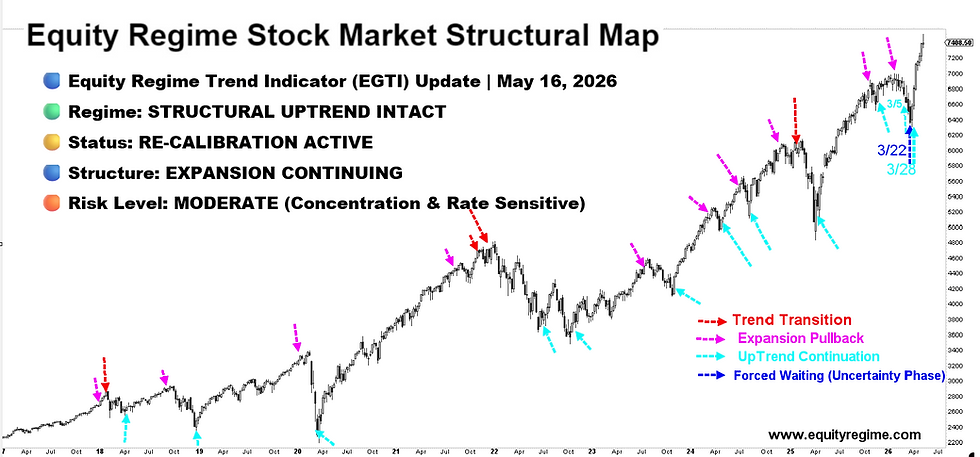
🔵 Equity Regime Trend Indicator (EGTI) Update | May 16, 2026
🟢 Regime: STRUCTURAL UPTREND INTACT
🟡 Status: RE-CALIBRATION ACTIVE
🔵 Structure: EXPANSION CONTINUING
🟠 Risk Level: MODERATE (Concentration & Rate Sensitive)
Equity Regime Trend Indicator (EGTI) Structural Summary
The broader market structure remains constructive despite increasing macro noise around rates, oil, and AI concentration concerns.
This is not a classic late-stage euphoric breakout environment across the full market.
Instead, it continues to resemble a selective institutional expansion phase:
Mega-cap AI infrastructure and software remain leadership anchors.
Cyclical and rate-sensitive sectors continue to lag.
Breadth is uneven, but deterioration remains contained rather than cascading.
Importantly, the market has so far absorbed:
higher Treasury yields,
delayed rate-cut expectations,
Middle East oil-related inflation pressure,
without triggering broad structural liquidation.
That distinction matters.
Current Structural Interpretation
The market is increasingly transitioning from:
“everything rallying together”
toward:
“capital selectively rotating within an intact uptrend.”
This usually occurs in the middle portion of mature trend continuation phases, not necessarily at final tops.
Semiconductors and AI infrastructure remain extended on a short-term basis, but:
earnings confirmation,
capex visibility,
and ongoing AI infrastructure demand
continue to support the broader structural thesis.
At the same time, software and platform-layer AI beneficiaries are beginning to absorb more capital rotation, helping stabilize index-level structure even during semiconductor pauses.
Key Structural Observations
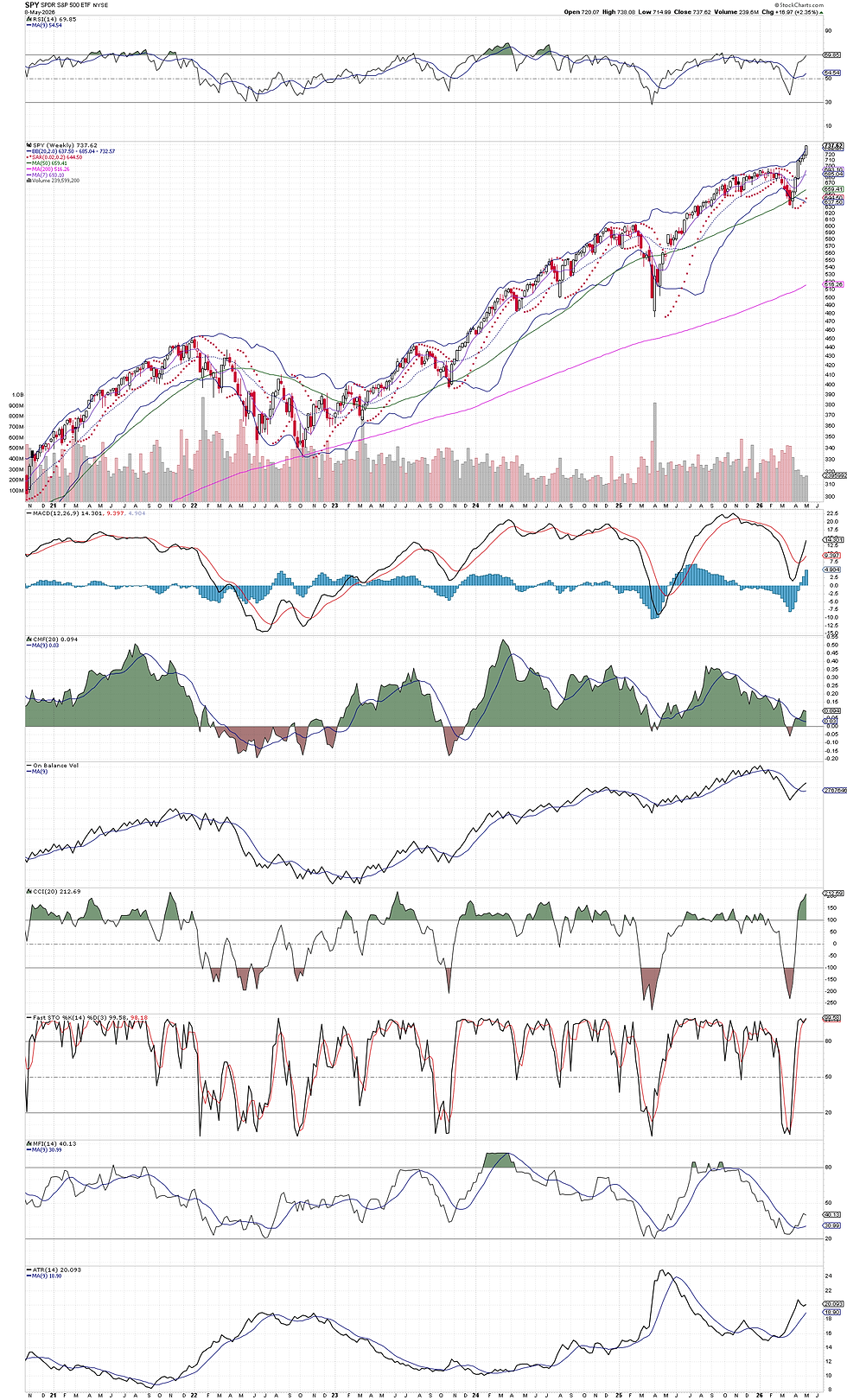
SPX trend structure remains above major weekly support boundaries.
No confirmed index-level distribution acceleration is visible yet.
Volatility term structure still does not reflect systemic stress.
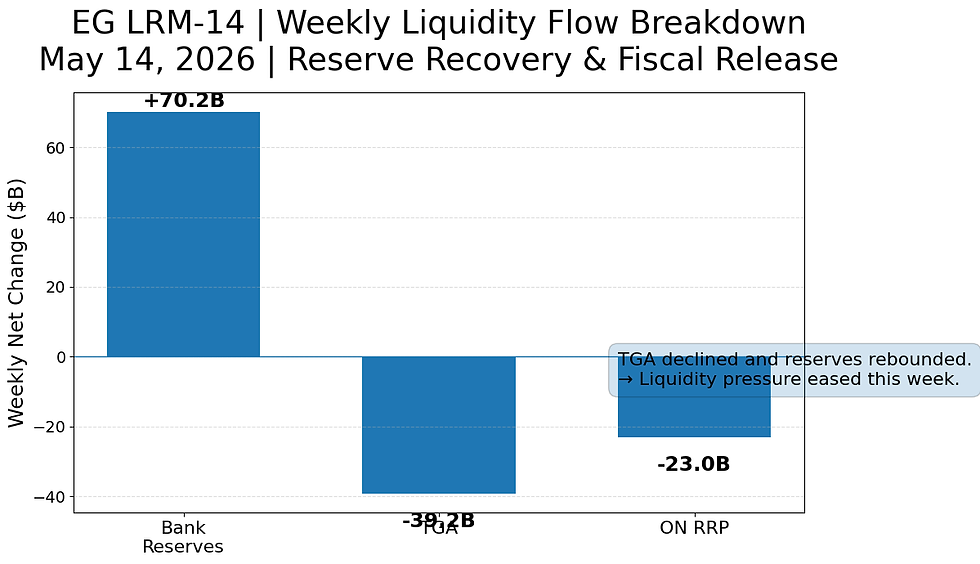
Liquidity conditions remain tighter than 2024, but not restrictive enough to break trend continuation.
Positioning remains elevated, but not at historical euphoric extremes associated with major secular tops.
Founder’s Note
A market top is usually a process, not a headline.
Current conditions resemble:
internal rotation,
valuation debate,
and selective overheating,
more than a completed structural breakdown.
The biggest mistake at this stage is often assuming:
“extended” automatically means “finished.”
In strong structural regimes, markets frequently resolve overbought conditions through:
time,
rotation,
and consolidation,
rather than immediate collapse.
That does not eliminate correction risk.
It means the correction path remains structurally conditional rather than structurally confirmed.