US Stock Market Top & Bottom Timing Signals (EGTB) Signal Update May 13, 2026


May 13, 2026
US Stock Market Top & Bottom Timing Signals (EGTB) Signal Update
May 13, 2026
Signal Dashboard
Signal Area | Current Status | Interpretation |
Bottom | 🟢 ACTIVE | Mar 9, 2026 carry-over signal; expansion phase still active |
Top | 🔴 NONE | No confirmed top structure |
Volatility | 🟡 COMPRESSION | Supportive and stabilizing |
Structure | 🔵 INTACT | Leadership reasserting; pullbacks absorbed |
Regime | 🟣 DISPERSION | Selective expansion continues |
Bottom Line
Signal unchanged. Expansion continues, but participation is becoming increasingly selective.
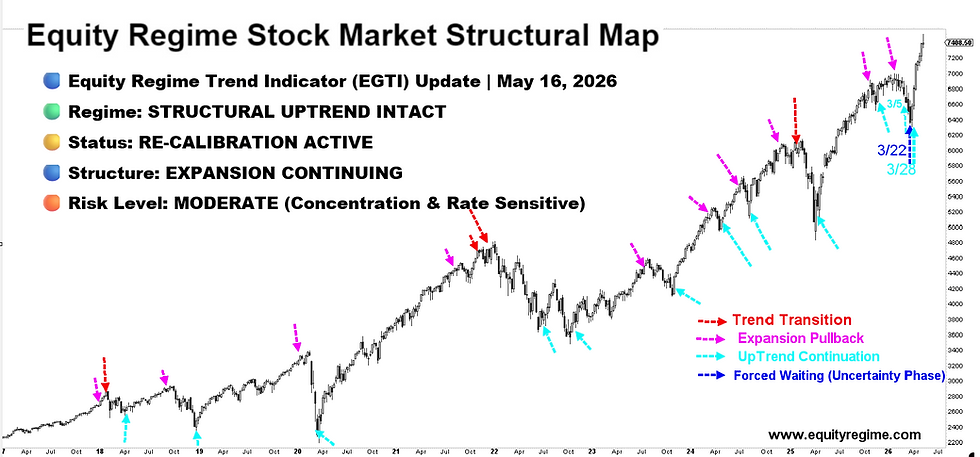
The market remains in an expansion phase following the April 1st. bottom signal. Pullbacks are still being absorbed, volatility remains contained, and leadership continues to rotate beneath the index surface.
There is no confirmed top signal at this stage.
US Stock Market Top & Bottom Timing Signals (EGTB) Signal Model Notes
US Stock Market Top & Bottom Timing Signals (EGTB) is a timing model, not a trend or valuation framework.
It should be used together with EGTI, where:
US Stock Market Trend signal EGTI defines the market trend.
EGTB identifies timing conditions within that trend.
Bottom signals typically evolve through:
volatility compression → consolidation → expansion
A confirmed Top requires alignment of three conditions:
Persistent volatility expansion, not merely event-driven volatility
Positioning crowding across institutional and retail investors
Credit deterioration
Absence of these conditions = no top confirmation.
EGTB signals are updated dynamically as conditions evolve. If confirmed Top or Bottom conditions emerge, the model will issue updates immediately rather than waiting for scheduled reports.
Signal Update Context
No structural deterioration has emerged.
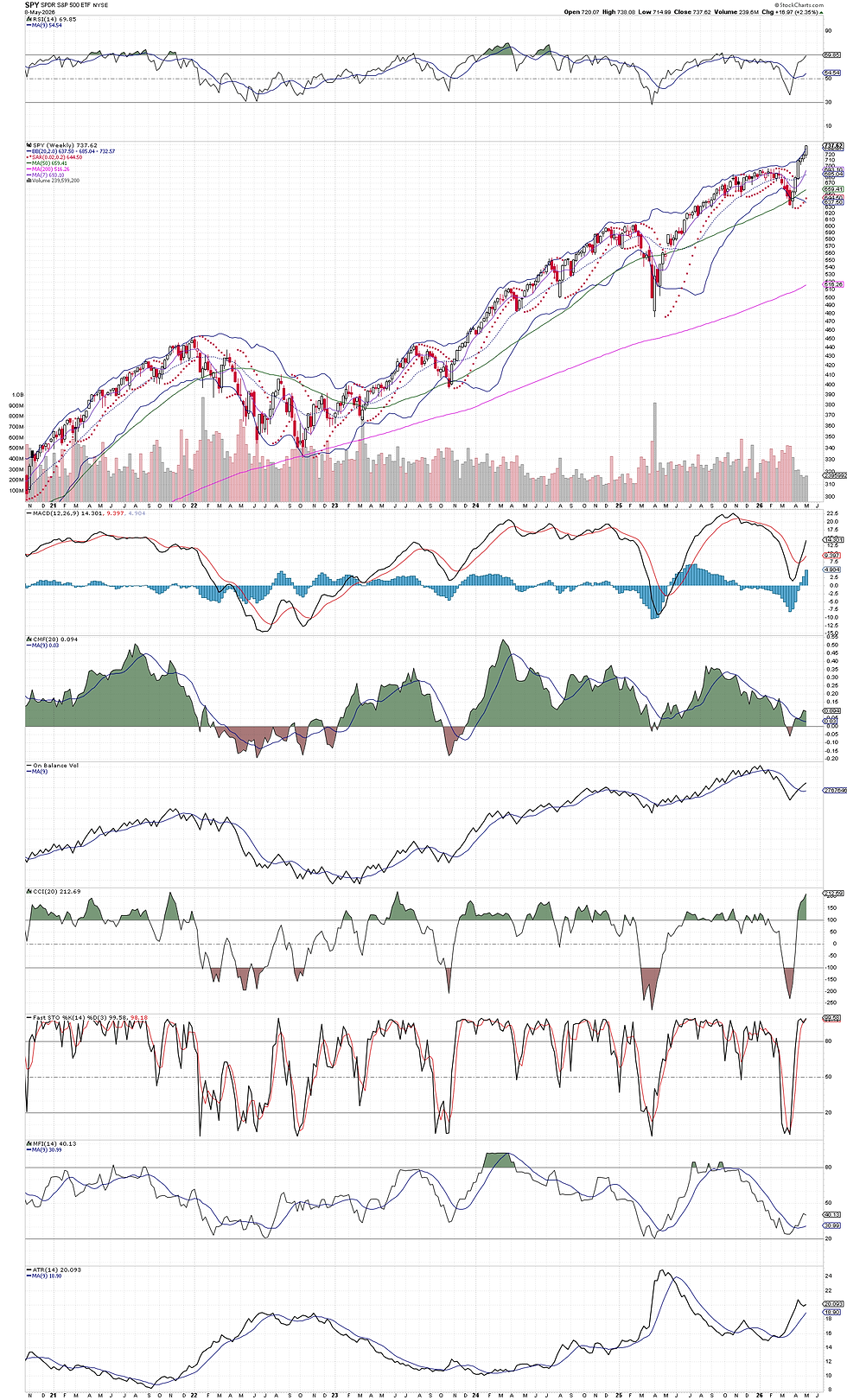
This week continued to show shallow pullbacks, rapid absorption of weakness, and renewed leadership from technology and semiconductors.
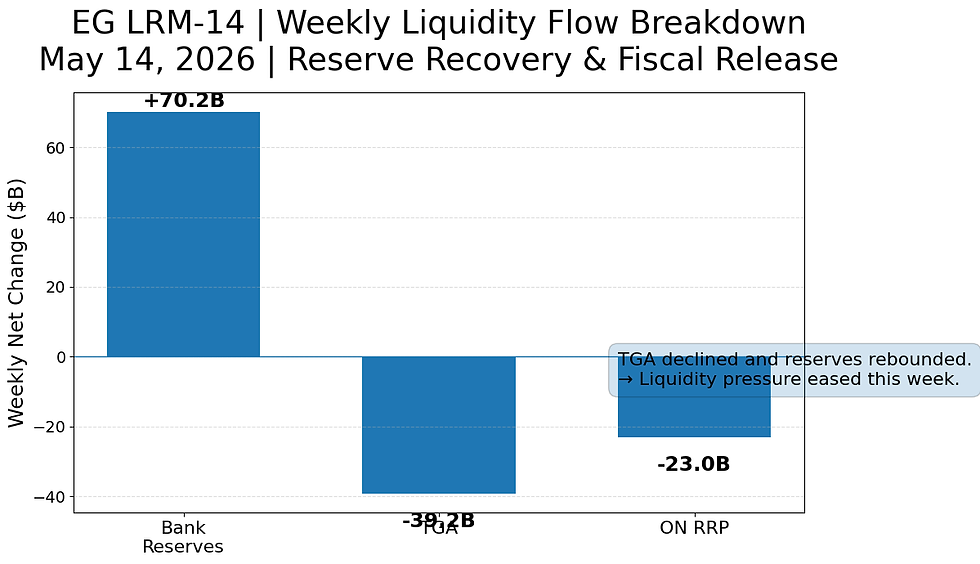
Volatility compression has remained intact despite elevated macro noise from yields, inflation discussion, and policy uncertainty.
Dispersion is still the dominant regime beneath the index surface. Individual sectors and stocks continue rotating aggressively, while index-level structure remains stable.
This remains consistent with an ongoing expansion regime rather than a completed cycle.
Founder’s Note
One of the biggest mistakes investors make during expansion phases is expecting trend continuation to feel comfortable.
It usually does not.
As expansion matures, the market becomes noisier internally while remaining structurally stable externally. That creates the illusion of weakness, especially when leadership rotates rapidly beneath a consolidating index.
But structurally, the model still sees no alignment for a top.
Volatility is not persistently expanding. Credit conditions are not deteriorating. Positioning still lacks the type of euphoric saturation typically associated with major cyclical peaks.
Instead, what we continue to observe is a market transitioning from broad rebound behavior into selective expansion behavior.
That distinction matters.
Early-stage rebounds are emotional and synchronized. Expansion phases are rotational, uneven, and increasingly dependent on leadership quality.
This is not deterioration.
This is maturation inside continuation.