From Semiconductor Cycle to AI Infrastructure Cycle
Same structure. Different physics.
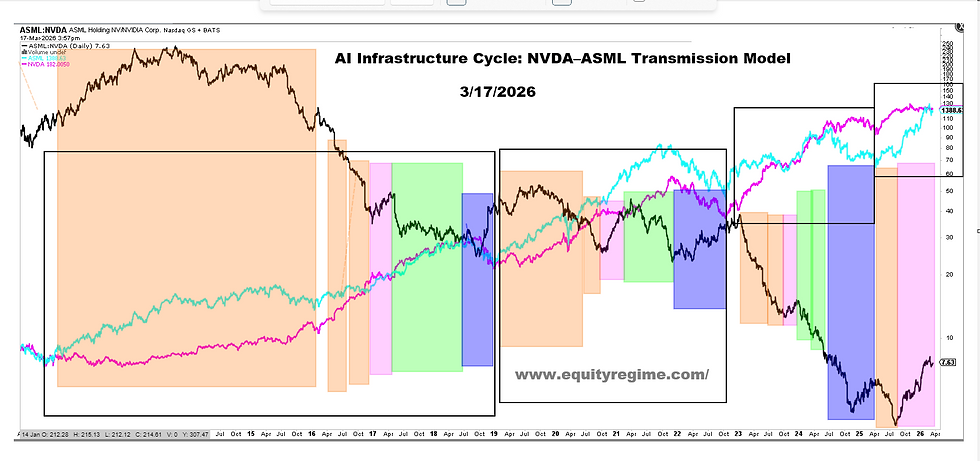
fig1:AI Infrastructure Cycle: NVDA–ASML Transmission Model
1. The shift is not incremental — it’s structural
Everyone is focused on $NVDA’s conference announcements — chips, partnerships, roadmaps.
That’s surface.
What actually matters is this:
The semiconductor cycle has transitioned from a demand-driven inventory cycle to an AI-driven infrastructure cycle.
This is not a sector upgrade. It is a regime shift in how capital, demand, and pricing interact.
2. The structure didn’t change — the engine did
Across both regimes, the same four phases persist:
Narrative ignition (NVDA leads)
Participation expansion (infra spreads)
Capex validation (ASML confirms)
De-risk / reset (liquidity unwind)
👉 The sequence is stable.👉 The behavior is not.
3. What changed: cycle dynamics
Time — compression
7-year → 4-year → ~2–3-year cycles
now approaching sub-3-year cadence
Driven by:
hyperscaler capex loops
faster information pricing
rapid positioning shifts
Amplitude — expansion
AI cycles are more violent:
capital concentration
$NVDA as pricing anchor
derivatives amplification
Result:
sharper rallies
faster drawdowns
Synchronization — tighter, but fragile
transmission across layers is faster
but breakdown happens just as quickly
Failure risk — new variable
Not every cycle completes.
Phase 2 can stall before Phase 3 if:
ROI weakens
capex slows
leadership fails
4. Where we are now
Within the AI-native decade:
Cycle 1 → formation
Cycle 2 → expansion
Cycle 3 → full boom + unwind
Cycle 4 → in progress
Current state:
Phase 2 — expansion without full synchronization
5. What comes next
If leadership expands:
$NVDA re-accelerates
infra confirms ($ANET $VRT $AVGO)
$ASML stabilizes
👉 Phase 3👉 Broad, fast, compressed rally
If not:
👉 Fragmentation👉 No full cycle completion
6. The key misunderstanding
The market asks:
“Is $NVDA overvalued?”
The correct question:
Where are we in the transmission cycle?
Final framework
The cycle is no longer defined by time.
It is defined by transmission —as reflected in the NVDA–ASML lead–lag structure shown above.
From $NVDA’s pricing power
to infrastructure expansion
to $ASML’s capex confirmation.
That sequence determines whether a cycle completes — or fails.
We are not waiting for a cycle.
We are watching whether it propagates.
One-line takeaway
Same structure. Different physics.
Fig2:NVDA–ASML Lead–Lag Relationship Across AI Cycles

About Equity Regime
Equity Regime is an independent research platform dedicated to mapping structural shifts across markets, technology, and capital cycles.
Our focus is not on predicting daily price movements, but on identifying regime transitions — periods when consensus narratives lag underlying reality and long-term repricing quietly begins.
In an environment dominated by noise, our objective is simple:
Detect the shift before it becomes obvious.