Hormuz Is Not Just an Oil Story
When a Logistics Chokepoint Becomes a Global Macro Shock
Most discussions about the Strait of Hormuz focus on oil.
But oil is not the real systemic risk.
Hormuz is not just an energy chokepoint — it is a global logistics chokepoint.
If the Strait remains disrupted, the first shock is not an oil shortage.
It is supply chain paralysis.
The transmission mechanism is straightforward:
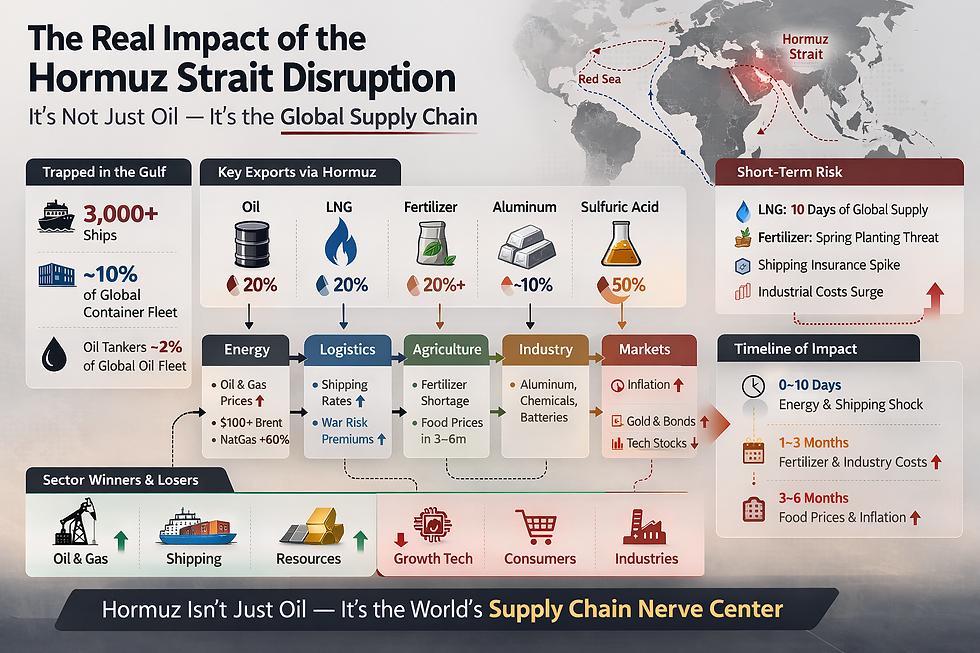
Energy → Shipping → Fertilizer → Industry → Inflation → Markets
This is how a regional conflict can evolve into a global macro shock.
Beyond Oil: A Critical Supply Chain Node
The Strait of Hormuz carries far more than crude.
Key flows include:
LNG exports from Qatar
Fertilizer inputs for global agriculture
Aluminum and petrochemicals
Container traffic connecting Gulf ports to Asia and Europe
This makes the Strait not merely an energy route, but a core node in the global supply chain network.
Disruption at such nodes tends to ripple far beyond the commodity directly associated with them.
The Overlooked Risk: Shipping Insurance
Another critical but often ignored factor is shipping insurance.
In conflict zones, the key constraint often becomes war-risk insurance coverage.
When war-risk premiums surge:
Ships stop entering affected waters
Banks stop financing cargo shipments
Trade flows slow dramatically
In such situations, supply does not disappear.
Instead, transport stops functioning.
Why Chokepoints Move Markets
Markets frequently frame Hormuz as an oil story.
Historically, however, chokepoints move markets through logistics and supply chains, not just energy.
Once transport routes are disrupted, the economic transmission often unfolds in stages:
Energy → Shipping → Industrial Inputs → Food and Manufacturing Costs → Inflation → Asset Prices
That is why narrow waterways can become global macro catalysts.
What begins as a regional geopolitical event can ultimately reshape inflation expectations, sector performance, and global market positioning.