【EG Macro Analysis】 January FOMC Minutes: Shadow Leverage Risk

Jan FOMC Minutes: Defensive Pause & Qualitative Warnings on Shadow Leverage
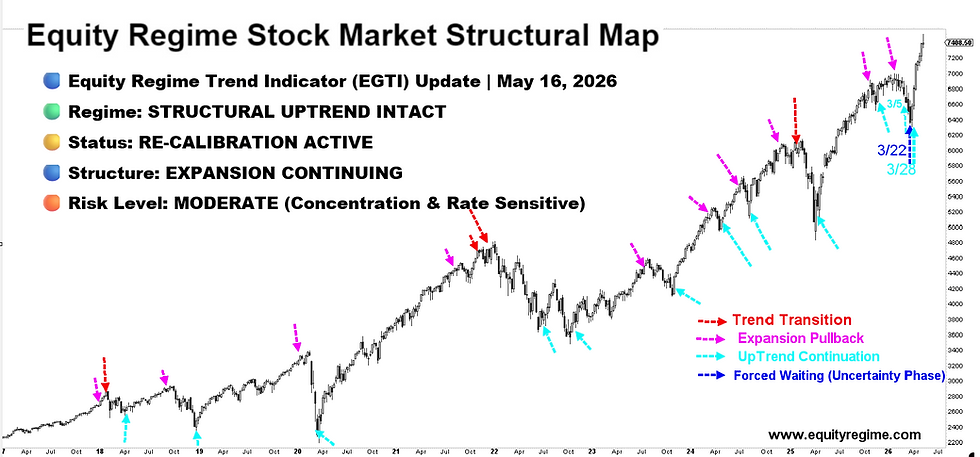
Regime Classification: Re-calibration
1. Policy Stance: Re-balancing Risk Priorities
The minutes do not signal a change in policy direction but reveal a re-calibration of risk weightings within the Committee.
Restrictive Range: Interest rates remain in the 3.5% to 3.75% target range.
Shift in Focus: While inflation remains a variable, the discussion among several members (including Waller and Miran) regarding a 25bps cut indicates the focus is shifting from a "sole inflation target" toward a "dual risk balance".
Qualitative Take: This is not a signal of easing, but a re-ordering of risks.
2. Basis Trade: A Locked-in Structural Vulnerability
The minutes explicitly cite the relative-value positions of hedge funds in the Treasury market and their associated leverage risks. The critical issue is the mechanism, not the scale:
High Leverage & Repo Reliance: These positions are heavily dependent on repo market financing.
Volatility Sensitivity: Highly sensitive to repo market conditions; any tightening or spike in volatility could trigger a non-linear de-leveraging feedback loop.
Qualitative Take: This is a structural risk, not a macro loss of control.
3. AI Financing: Liquidity Absorption in Private Markets
The Committee has officially brought AI-related infrastructure financing into the financial stability discussion. The concern lies in the financing structure, not the industry's direction:
Opaque Channels: Capital is flowing through opaque private markets and off-balance-sheet vehicles.
Liquidity Stratification: Capital is being absorbed into "low-liquidity asset pools." Within the EG LRM-14 framework, this represents Systemic Abundance + Structural Fragmentation, rather than direct Tightening.
4. Regime Assessment
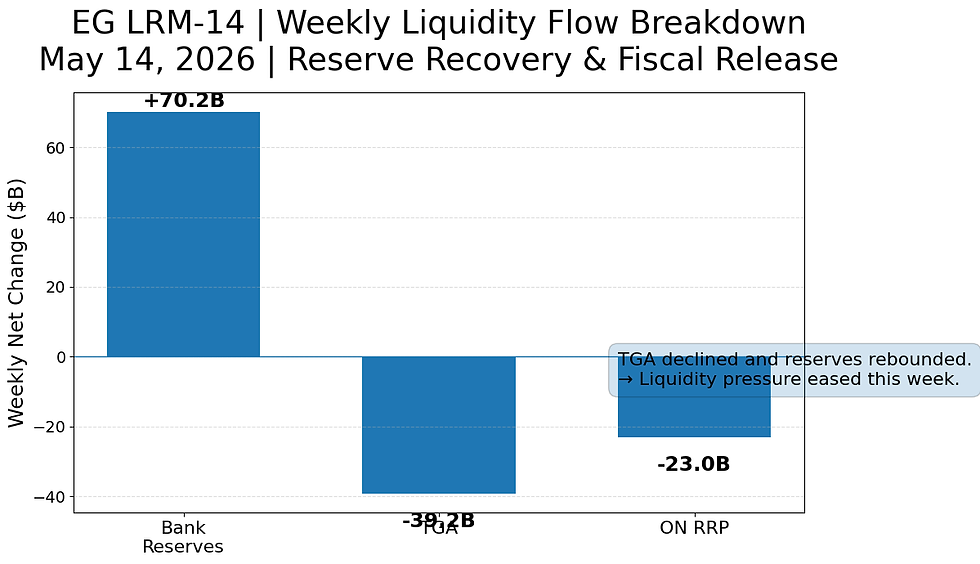
Current liquidity remains within the Abundant zone. Bank reserves have not yet shown systemic contraction. However, capital is being diverted into high-leverage structures and low-transparency markets. This explains the current market anomalies:
Signal Distortion: Micro signals (Insider Activity) and price momentum are experiencing a phase of distortion.
Efficiency Decay: As liquidity is structurally absorbed, the pricing efficiency of public markets inevitably declines.
Core Directive
The true signal lies not in the language of the minutes, but in the H.4.1 report.
If Reserves Hold Steady: Risks remain in the monitoring phase.
.If Reserves Show Abnormal Attrition: The liquidity matrix will undergo a forced transition.
Current Phase: Re-calibration.
Not a return to easing. Not a restart of tightening. The system remains stable, but the stress is accumulating.
About Equity Regime
Equity Regime is an independent research platform dedicated to mapping structural shifts across markets, technology, and capital cycles.
Our focus is not on predicting daily price movements, but on identifying regime transitions — periods when consensus narratives lag underlying reality and long-term repricing quietly begins.
In an environment dominated by noise, our objective is simple:
Detect the shift before it becomes obvious.